
Pompano Beach weather by month
Average highs, lows and rainfall for every month, and what those numbers feel like on the sand.
Warm all year
2-minute walk to the beach
Courtyard pool
Book direct

Where these numbers come from
The figures on this page are rounded averages from NOAA’s 1991-2020 U.S. Climate Normals for Fort Lauderdale-Hollywood International Airport, the closest long-record weather station to Pompano Beach. Normals are 30-year averages. They tell you what a month is usually like, not what next week will bring. Temperatures are in degrees Fahrenheit and rainfall is in inches.
Pompano Beach sits right on the ocean, so the sea breeze often takes the edge off summer afternoons and winter nights. Conditions on the beach can feel a little different from the airport, but the pattern through the year is the same.
Average weather at a glance
- January: average high 76°F, average low 61°F, average rainfall 2.9 in
- February: average high 77°F, average low 63°F, average rainfall 2.4 in
- March: average high 80°F, average low 66°F, average rainfall 2.4 in
- April: average high 83°F, average low 70°F, average rainfall 3.0 in
- May: average high 86°F, average low 74°F, average rainfall 5.6 in
- June: average high 88°F, average low 77°F, average rainfall 9.6 in
- July: average high 90°F, average low 78°F, average rainfall 5.4 in
- August: average high 90°F, average low 78°F, average rainfall 7.9 in
- September: average high 88°F, average low 77°F, average rainfall 8.0 in
- October: average high 85°F, average low 74°F, average rainfall 7.4 in
- November: average high 81°F, average low 68°F, average rainfall 3.7 in
- December: average high 78°F, average low 65°F, average rainfall 2.8 in
That adds up to about 61 inches of rain in an average year, with roughly two thirds of it falling from May through October.
The dry season: November to April
January
The coolest month, with an average high around 76°F and an average low around 61°F. Most days are sunny and comfortable for walking. A cold front can bring a few breezy, cooler days, so pack a light jacket. Average rainfall is about 2.9 inches.
February
Average highs reach about 77°F and lows about 63°F. February ties with March as one of the two driest months, at about 2.4 inches of rain on average. It is peak snowbird season.
March
Average highs climb to about 80°F, with lows around 66°F and about 2.4 inches of rain. Beach days feel properly warm again, and spring break families arrive.
April
About 83°F for an average high and 70°F for an average low. Rain is still modest at about 3 inches. April is one of the most comfortable months of the year.
November
An average high around 81°F and an average low around 68°F. Rain drops to about 3.7 inches as the dry season begins, and the humidity starts to ease.
December
Average highs near 78°F and lows near 65°F, with about 2.8 inches of rain. Holiday weeks are busy, so book early.
The wet season: May to October
May
A warm transition month: average high about 86°F, average low about 74°F and about 5.6 inches of rain as the wet season begins.
June
Average highs around 88°F and lows around 77°F. June is the wettest month in this record, with about 9.6 inches of rain on average, mostly in short afternoon downpours. Hurricane season begins June 1.
July
One of the two hottest months, with an average high around 90°F and an average low around 78°F. Average rain eases to about 5.4 inches. Go to the beach early and use the pool in the afternoon.
August
Just as hot as July, around 90°F and 78°F on average, with about 7.9 inches of rain. Storms usually build in the afternoon and clear by evening.
September
Average highs about 88°F, lows about 77°F and about 8 inches of rain. The National Hurricane Center puts the peak of the Atlantic season on September 10. Read our hurricane season travel tips if you are coming now.
October
Average highs around 85°F and lows around 74°F, with about 7.4 inches of rain. By late October the air often starts to feel drier.
What the numbers mean for your trip
A few patterns hold most of the year:
- Summer rain is usually brief. A heavy storm at 3 PM often clears by 5 PM.
- Mornings are the best beach hours from May to October, before the heat and storms build.
- Winter nights can feel cooler than the averages suggest when a front passes, especially with wind off the water.
- The sun is strong in every month. Sunscreen and shade matter in January as much as July.
For a season-by-season view of crowds as well as weather, read the best time to visit Pompano Beach. For what to bring, see our packing list.
Sun, humidity and sea breeze
Temperature is only part of the story in South Florida. Humidity is what makes July feel hotter than the thermometer says, and it is what makes a January afternoon feel so comfortable. From June through September, expect sticky mornings and warm nights. From December through March, the air is noticeably drier.
The sun is strong all year at this latitude, even on cloudy days, so sunscreen, a hat and shade are worth packing in every month. Along the beach, an onshore breeze often keeps the sand a few degrees more pleasant than inland streets in summer. In winter, that same wind can make an evening walk on the pier feel cool, which is why we suggest a light layer from December to February.
Plan around the weather, not against it
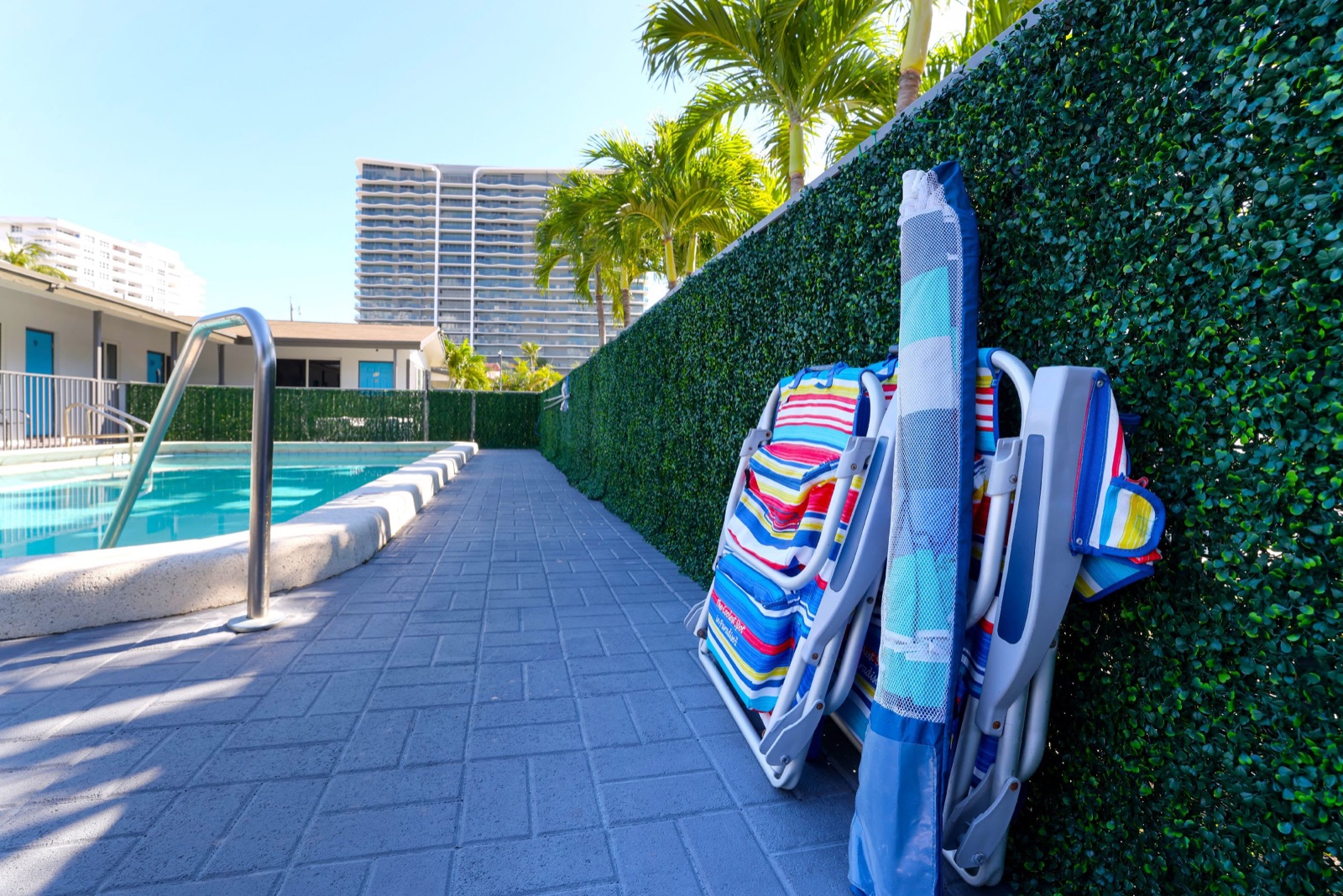
Staying close to the sand makes any month easier. We are about a 2-minute walk from the beach, so you can head down at sunrise, come back to the courtyard pool when it gets hot and walk out again in the evening. When an afternoon storm rolls through, a suite with a living room and kitchen, or a studio with a kitchenette, is a comfortable place to wait it out.
When you have picked your month, check availability and book direct.
These are long-term averages, not forecasts. Before you travel, check the National Weather Service Miami forecast at weather.gov/mfl.
The Pompano Breeze Standard
Clean every time
Every unit is cleaned and inspected before every arrival.
A real person answers calls, texts and emails.
Steps to the sand
Towels, chairs and the beach, a 2-minute walk away.
FAQ
What is the warmest month in Pompano Beach?
July and August, with average highs around 90°F and average lows around 78°F, based on NOAA normals for nearby Fort Lauderdale.
What is the coldest month in Pompano Beach?
January, with an average high around 76°F and an average low around 61°F.
What is the rainiest month in Pompano Beach?
June averages about 9.6 inches of rain at the nearby Fort Lauderdale station, followed by September and August.
Is it warm enough to swim in Pompano Beach in winter?
Many visitors swim in winter, though the ocean is cooler than in summer. On cooler days the courtyard pool and the sun on the sand are the easier option.

Find your month by the beach.
Check open dates for our studios and suites, and book direct with no platform fees.